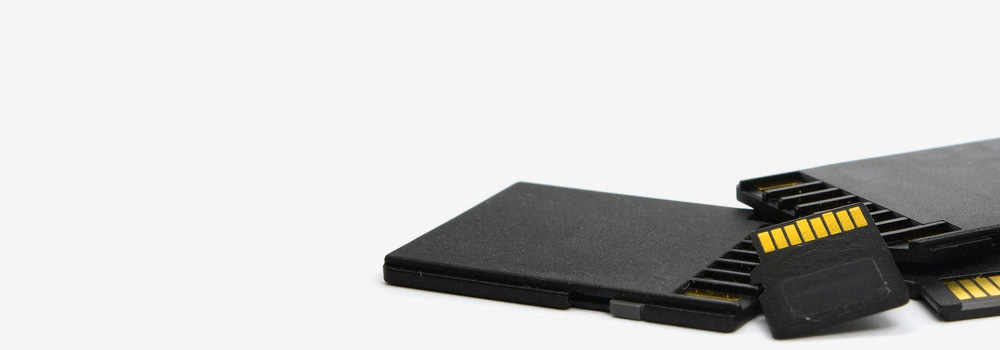
Swansea Data Recovery: The UK’s No.1 Memory Card Data Recovery Specialists
For 25 years, Swansea Data Recovery has been the UK’s leading specialist in recovering data from all types of memory cards. From the SD card in your camera to the microSD in your drone or action cam, we possess the advanced technology and expertise to recover your critical photos, videos, and files. Memory cards are highly susceptible to physical damage, logical corruption, and internal electronic failure. Our state-of-the-art laboratory is equipped to handle these complex challenges at a component level, providing the highest possible success rate for data recovery.
Top 30 Memory Card Brands & Types We Recover
We support and recover data from every major memory card brand and format available in the UK market.
Main Memory Card Types We Support:
-
SD Series: SD, SDHC, SDXC, SDUC
-
microSD Series: microSD, microSDHC, microSDXC
-
CFexpress: Type A, Type B
-
CompactFlash (CF): Type I, Type II, CFast
-
Memory Stick (Sony): MS Pro, MS Pro Duo, MS Micro (M2)
-
XQD (Sony, Nikon)
-
MultiMediaCard (MMC)
-
xD-Picture Card (Olympus, Fujifilm)
Top 25 Memory Card Faults & Our Technical Recovery Process
Memory card recovery requires a blend of NAND flash expertise, electronic repair, and logical reconstruction. Here is a detailed breakdown of our processes.
1. NAND Flash Memory Wear-Out (End of Life)
-
Summary: The flash memory cells have exceeded their program/erase (P/E) cycles, leading to a high rate of uncorrectable errors. The card may become read-only, fail to write new data, or become unrecognisable.
-
Technical Recovery: We perform chip-off recovery. The NAND flash chip is desoldered from the card’s PCB using a controlled reflow station. The chip is read in a dedicated NAND programmer (e.g., PC-3000 Flash, Soft-Center). The raw dump contains a high bit error rate. Our software uses advanced error correction algorithms, often more powerful than the card’s internal ECC. We perform read retry calibration, systematically adjusting the read reference voltages to find the optimal threshold for reading the degraded cells, effectively “tuning” the reader to the worn-out NAND.
2. Flash Memory Controller Failure
-
Summary: The card’s main processor (controller) has failed due to electrical surge, physical shock, or a firmware bug. The card is not detected by any reader.
-
Technical Recovery: This is the most complex memory card recovery. We perform chip-off recovery as above. The primary challenge is that the controller manages a Flash Translation Layer (FTL)—a complex mapping of logical blocks to physical NAND pages. Without the controller, this map is lost. Our software performs FTL reconstruction by analysing the raw NAND dumps for patterns, including out-of-band (OOB) metadata, to reverse-engineer the block mapping, wear-leveling, and bad block management algorithms specific to that controller model.
3. Physical Damage to PCB & Connectors
-
Summary: The card’s gold fingers are worn, corroded, or the PCB is cracked or broken from physical abuse.
-
Technical Recovery: For damaged connectors, we use precision polishing tools with fine abrasive films to carefully remove a microscopic layer, restoring the contact surface. For cracked PCBs, we use conductive epoxy or micro-wire bonding under a microscope to repair broken traces. If the PCB is irreparable, we desolder all essential components (NAND, ROM, controller) and transplant them onto a compatible donor PCB, a process requiring expert micro-soldering skills.
4. Accidental Formatting (Logical)
-
Summary: The user has formatted the card, erasing the file system structure (FAT32, exFAT, NTFS).
-
Technical Recovery: We create a sector-by-sector image of the card. We then use file system recovery software (R-Studio, UFS Explorer) to perform a deep scan. This scan searches for residual file system metadata. For FAT/exFAT, it looks for residual directory entries and FAT tables. For more robust systems, it uses file carving (raw recovery) based on file headers and footers (e.g., JPEG SOI/EOI markers, MP4 atoms). We manually verify and reconstruct the directory hierarchy where possible.
5. File System Corruption
-
Summary: The file system’s critical data structures are corrupted due to an unsafe ejection, power loss during write, or bad sectors. The card may prompt to be formatted or show corrupted files.
-
Technical Recovery: We image the card and then perform a manual file system repair. For FAT/exFAT, we locate the backup Boot Sector and FAT and use it to overwrite the damaged primary copy. We use hex editors to manually repair damaged directory entries, checking for consistency in the FAT cluster chains. For exFAT, we rebuild the $Bitmap file by scanning for allocated clusters.
6. Bad Blocks/Unstable Sectors
-
Summary: Individual blocks or pages within the NAND flash have failed or become unstable, leading to read/write errors and data corruption.
-
Technical Recovery: We use hardware imagers (DeepSpar USB Stabilizer) that employ adaptive reading. The software reads unstable sectors multiple times, using techniques like read retry and adjustable read timeouts to achieve a consensus on the correct data. It builds a logical map of bad blocks, skipping them after multiple failed attempts to prevent the card from locking up, and fills the gaps with data from subsequent successful reads.
7. Water & Liquid Damage
-
Summary: The card has been exposed to water or other liquids, leading to corrosion of the PCB and internal components.
-
Technical Recovery: The card is immediately cleaned in an ultrasonic cleaner using high-purity isopropyl alcohol to remove all corrosive residues. The PCB is then inspected under a microscope for corroded traces and components. Damaged components are replaced using hot-air rework and micro-soldering techniques. The NAND and controller are tested for shorts before power is applied.
8. Firmware Corruption (In Controller)
-
Summary: The firmware running on the card’s controller is corrupted, preventing the card from initialising correctly.
-
Technical Recovery: We use hardware tools (PC-3000 Flash) to put the controller into a technological or boot-mode. This bypasses the damaged primary firmware, allowing us to directly access the NAND memory. We can then either re-flash the firmware using a known-good dump from our database or simply use the tool to directly read the NAND chips, bypassing the card’s normal operating system entirely to create a raw image.
9. Accidental File Deletion
-
Summary: The user has deleted files from the card, and they are no longer in the recycle bin (which doesn’t exist on most cards).
-
Technical Recovery: We image the card to prevent overwriting. Recovery relies on the fact that deletion typically only removes the file’s directory entry and marks its clusters as free in the FAT. We scan the entire card for these orphaned directory entries and reconstruct the file by following the starting cluster pointer and calculating the file length. For raw carving, we search for specific file signatures.
10. Partition Table Corruption
-
Summary: The Master Boot Record (MBR) or GUID Partition Table (GPT) that defines the card’s partition is damaged.
-
Technical Recovery: We image the card and then scan the entire storage area for a backup boot sector (common on FAT32) or the secondary GPT. If found, we use it to rebuild the primary table. If not, we perform a signature search for the start of a partition (e.g., the first sector of a FAT32 partition has specific signatures) and manually reconstruct the partition table with the correct starting LBA.
11. Virus or Malware Infection
-
Summary: Malicious software has corrupted, deleted, or encrypted files on the card.
-
Technical Recovery: After imaging, we use anti-virus software to clean the image. For data destruction or encryption, we employ standard logical recovery techniques (file carving, metadata analysis). We also scour unallocated space for temporary files or thumbnails that may contain uncorrupted versions of the data.
12. Electrical Overstress (Power Surge)
-
Summary: A voltage spike from a faulty card reader or device has damaged components on the card’s PCB.
-
Technical Recovery: The PCB is diagnosed for failed components. We typically find shorted TVS diodes and damaged voltage regulators. These are replaced. If the controller or NAND has been damaged by the overvoltage, we proceed with a chip-off recovery to read the NAND memory directly.
13. Wear Levelling Algorithm Failure
-
Summary: The controller’s algorithm for evenly distributing writes across the NAND has failed, causing premature wear on specific blocks and data corruption.
-
Technical Recovery: This is resolved during the FTL reconstruction phase of a chip-off recovery. Our software analyses the wear patterns and physical-to-logical block mapping to identify and compensate for the failed algorithm, allowing us to reassemble a coherent logical image from the unevenly worn physical NAND.
14. Unsupported File System
-
Summary: The card was formatted in a device (e.g., a specialised camera or drone) using a rare or proprietary file system.
-
Technical Recovery: We image the card and then perform reverse engineering on the disk image. Using a hex editor, we analyse the raw data structures to identify patterns for files, directories, and allocation tables. We then write custom scripts or use flexible recovery tools to parse these custom structures and extract the files.
15. Overwritten Data
-
Summary: New data has been written to the card after the loss, overwriting the physical sectors where the old data resided.
-
Technical Recovery: This is often unrecoverable. However, we can attempt to find file system journal fragments or temporary files that may not have been overwritten. In some cases, due to the FTL and wear-leveling, new data may be written to different physical NAND blocks than the logical blocks that were freed, leaving the old data physically intact but logically unmapped. Advanced FTL reconstruction can sometimes recover this “lost” data.
16. Bent or Broken Pins (CFast, CFexpress)
-
Summary: The delicate pins inside a CompactFlash or similar card are bent or broken.
-
Technical Recovery: Using micro-tools and a microscope, we carefully straighten bent pins. For broken pins, we source a donor connector and perform a pin transplant, soldering a new pin into place. If the connector is too damaged, we bypass it entirely by soldering directly to the test points on the PCB to establish a data connection.
17. Manufacturing Defects (Bad NAND)
-
Summary: A inherent flaw in the NAND flash from the factory causes early failure.
-
Technical Recovery: We treat this as a case of severe bad blocks or NAND wear. Chip-off recovery is typically required. Our software is designed to handle a higher-than-average bit error rate from the outset, using aggressive ECC and read retry techniques to extract as much valid data as possible from the inherently flawed silicon.
18. Card Not Recognised by Any Reader
-
Summary: The card shows no signs of life when inserted into multiple known-good readers.
-
Technical Recovery: This is a symptom, not a cause. We follow a diagnostic tree: 1) Check PCB for physical/electrical damage. 2) Test voltage lines for shorts. 3) Attempt to put the controller into boot-mode. 4) If all else fails, proceed to chip-off recovery. The root cause is usually a failed controller, severely corrupted firmware, or a catastrophic PCB short.
19. Read/Write Errors (I/O Errors)
-
Summary: The operating system reports I/O errors when accessing the card.
-
Technical Recovery: This indicates communication failure between the controller and NAND. We use a hardware imager to send low-level ATA/USB commands, monitoring the error responses. We may need to degrade the communication speed (e.g., force from UHS-I to a legacy mode) to stabilise the connection enough to image the card before performing a full chip-off recovery to get the remaining data.
20. File Transfer Interruption Corruption
-
Summary: The card was removed or the system lost power while files were being written.
-
Technical Recovery: We image the card. The corruption is often limited to the file being written and the file system metadata. We repair the file system as described in (5). For the partially written file, we use file carving to extract the intact portion. For video files (e.g., MP4), we can often repair the container by rebuilding the MOOV atom (the index) to make the file playable up to the point of interruption.
21. Heat Damage
-
Summary: The card has been exposed to extreme heat, potentially de-soldering internal components or damaging the NAND silicon.
-
Technical Recovery: The PCB is inspected for cracked solder joints under a microscope and reflowed. The NAND chip is then read via chip-off. Heat can alter the magnetic properties of NAND cells (analogous to annealing), requiring extensive read retry calibration to find the new optimal read thresholds for the heat-affected silicon.
22. Cryptic Controller Lock (Password Protected)
-
Summary: A password has been set on the card (via a device’s settings) and then forgotten, or the controller has malfunctioned and locked itself.
-
Technical Recovery: We attempt to use technological commands to reset the password lock. If this is not possible, the only recourse is chip-off recovery. The data on the NAND itself is rarely encrypted in consumer cards; the lock is a function of the controller. By reading the NAND directly and reconstructing the FTL, we bypass the controller and its security.
23. SD Write-Protect Switch Malfunction
-
Summary: The physical write-protect switch on an SD card is broken or dislodged, tricking devices into thinking the card is read-only.
-
Technical Recovery: We open the plastic casing of the SD card. The switch interacts with a simple mechanical sensor on the PCB. We repair or bypass this sensor, often by soldering a small jumper wire to permanently set the “write-enabled” state, allowing full access to the card for imaging.
24. XQD/CFexpress Pin Shorting
-
Summary: The high-density pin array on XQD/CFexpress cards has become contaminated or damaged, causing electrical shorts between pins.
-
Technical Recovery: The card is meticulously cleaned with specialist contact cleaner. Using a microscope and multimeter, we test for continuity between adjacent pins. If a short is found, we use a micro-probe and soldering iron to carefully remove any conductive debris or repair damaged solder masks that are causing the short circuit.
25. Logical Capacity Reset (Shows 0MB)
-
Summary: The card reports a capacity of 0MB or a few megabytes to the OS. This is typically severe firmware corruption where the controller cannot read the card’s internal capacity data.
-
Technical Recovery: This requires firmware-level repair. We place the controller into boot-mode and directly access the System Area of the NAND where the capacity and other identification parameters are stored. We repair these modules or, more commonly, simply use our hardware to force the correct capacity and read the NAND memory directly, ignoring the corrupted firmware report.
Why Choose Swansea Data Recovery for Your Memory Card?
-
25 Years of Flash Expertise: We have been recovering data from memory cards since their inception.
-
Component-Level Recovery: We go beyond software, performing PCB repair, micro-soldering, and chip-off recovery.
-
Advanced NAND Tools: We invest in the latest hardware (PC-3000 Flash, DeepSpar) to handle complex FTL reconstruction and read retry calibration.
-
Vast Donor Inventory: We maintain a extensive library of donor cards and PCBs for component transplantation.
-
Free Diagnostics: We provide a clear, no-obligation report and a fixed-price quote before any work begins.
Contact Swansea Data Recovery today for a free, confidential evaluation of your memory card. Trust the UK’s No.1 specialists to recover your invaluable data.