Swansea Data Recovery: The UK’s No.1 Desktop Computer Data Recovery Specialists
With 25 years of dedicated service, Swansea Data Recovery stands as the UK’s premier specialist for desktop computer data recovery. Desktop drives, from high-capacity 3.5″ HDDs to blazing-fast NVMe SSDs, face unique challenges including extended power-on hours, heat cycles, and complex configurations like RAID. Our state-of-the-art laboratory is equipped with the advanced tools and certified cleanroom environment necessary to tackle every type of failure, from the legacy IDE drives in older towers to the latest enterprise-grade SAS and NVMe storage in modern workstations.
Supported Desktop Computer Manufacturers & Models
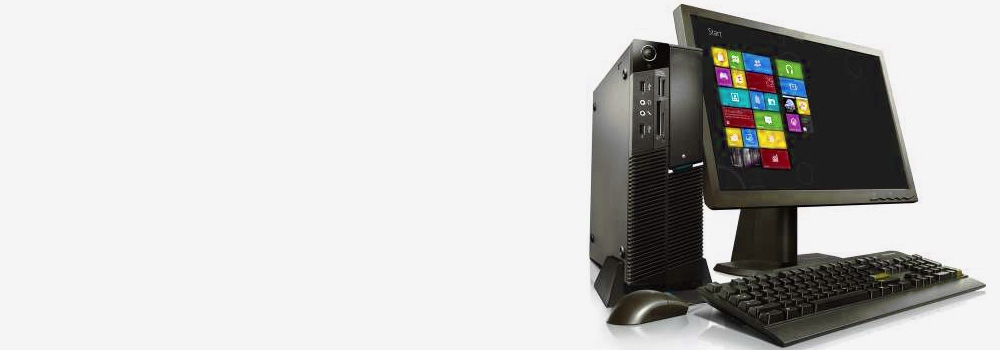
We recover data from the storage drives of all major desktop computer brands and their internal components:
Supported Desktop Drive Interfaces
Our engineers are proficient in recovering data from every storage interface found in desktop computers:
-
SATA (Serial ATA): All generations (SATA I, II, III), the standard for 3.5″ and 2.5″ desktop drives.
-
PATA (IDE): Legacy 40-pin IDE interface with 80-wire cables, common in pre-2005 desktops.
-
SAS (Serial Attached SCSI): Enterprise-grade drives found in workstations and servers.
-
SCSI: Legacy Ultra, Ultra Wide, and LVD interfaces from older workstations and servers.
-
PCIe (PCI Express): Add-in card SSDs and NVMe drives.
-
NVMe (Non-Volatile Memory Express): The protocol for high-speed SSDs over M.2 and PCIe slots.
-
M.2: Supporting both SATA and NVMe (PCIe) protocols.
-
U.2: Enterprise NVMe drives (SFF-8639) in high-end workstations and servers.
-
eSATA (External SATA): External drive enclosures connected to desktops.
-
Fibre Channel: High-performance enterprise storage networks.
-
Apple Proprietary: Including older ATA and new T2/Mx chip security.
Top 25 Desktop Hard Drive & SSD Faults & Our Technical Recovery Process
Desktop drives present unique recovery challenges due to their larger physical size, higher spindle speeds, and complex firmware. Here is a detailed breakdown of our processes.
1. Head Stack Assembly (HSA) Failure – 3.5″ Specific
-
Summary: The larger, heavier heads in 3.5″ drives are susceptible to crashes from impact or wear. Symptoms include loud clicking, beeping, or grinding.
-
Technical Recovery: In our Class 100 ISO 5 cleanroom, the drive is disassembled. The damaged HSA is carefully removed. We source a compatible donor HSA, often performing micro-soldering to transfer the original preamplifier chip to maintain compatibility with the drive’s unique adaptive data. The donor heads are installed, and the drive is immediately imaged using hardware (PC-3000) with controlled read retries to prevent damage on potentially degraded media.
2. Spindle Motor/Bearing Seizure
-
Summary: The high-torque motor in 3.5″ drives can seize due to failed bearings, often from dust ingestion or lubricant breakdown. The drive fails to spin up, drawing excessive current.
-
Technical Recovery: Cleanroom intervention is required. The platter stack is transplanted with extreme precision into an identical donor HDA with a confirmed healthy motor and bearing assembly. Maintaining platter alignment is critical. The spindle is often clamped during transfer to prevent micro-misalignment that would render the data unreadable.
3. Firmware Corruption (Service Area Damage)
-
Summary: The drive’s internal operating system, stored in the Service Area on the platters, is corrupted. Common on drives with high power-on hours. The drive may not be detected, or may detect with an incorrect capacity (e.g., 0 MB).
-
Technical Recovery: Using PC-3000, we place the drive into a technological mode to bypass corrupted modules. We directly access the Service Area to diagnose and repair damaged modules (e.g., TRANSLAT, SMART, CERT). We use factory-level commands to rewrite modules, carefully adapting them to the specific drive’s configuration parameters stored in its RAM and System Area.
4. PCB (Printed Circuit Board) Failure
-
Summary: Desktop PCBs are exposed to power surges from PSUs. TVS diodes, fuses, or the motor driver IC can fail. The drive is completely dead.
-
Technical Recovery: We diagnose failed components and replace them. A simple board swap is insufficient due to drive-specific adaptive data stored in a serial EEPROM. We desolder this ROM chip using hot-air rework and transfer it to a compatible donor PCB. For modern drives, the adaptive data may be stored in the main controller, requiring in-system programming.
5. Bad Sectors & Media Degradation
-
Summary: The large surface area of 3.5″ platters is prone to media degradation over thousands of hours of use, creating unstable sectors.
-
Technical Recovery: We use hardware imagers (DeepSpar, Atola) with sophisticated control algorithms. The process involves reading data using soft-resets and adjustable timeouts. We create a logical map, prioritising healthy areas first. For persistent areas, we apply firmware-level tweaks to temporarily reduce the drive’s read retry thresholds, allowing data extraction before sectors are permanently reallocated.
6. Platter Surface Scoring/Deep Scratching
-
Summary: A severe head crash has physically gouged the platter surface, permanently destroying data in those tracks.
-
Technical Recovery: After cleanroom disassembly and head replacement, we perform a full surface scan. The imager is configured to skip heavily damaged areas instantly. We recover all readable data first, then attempt multiple passes with varying physical head actuator offsets and adjusted read channel settings (MR head bias) to read remnant magnetic flux from damaged track edges.
7. SSD Controller Failure (SATA & NVMe)
-
Summary: The SSD’s main processor has failed. The drive is not detected or returns detection errors.
-
Technical Recovery: We perform chip-off recovery. The NAND flash chips are desoldered using a controlled reflow station. Each chip is read individually using a dedicated NAND programmer. The raw dumps are processed through our software, which uses controller-specific algorithms to reverse-engineer the RAID-like striping, XOR parity, and wear-leveling to reassemble the original logical data.
8. Accidental File Deletion or Formatting
-
Summary: Files or partitions have been deleted during OS reinstallation or disk cleanup.
-
Technical Recovery: We create a forensic sector-by-sector image. Using tools like R-Studio and UFS Explorer, we perform a deep scan, parsing raw data for file signatures and analysing surviving file system metadata (e.g., $MFT for NTFS). For formatted drives, we reconstruct the partition boot sector and directory tree from backup metadata.
9. Power Surge Damage
-
Summary: A voltage spike has damaged sensitive components on the PCB and potentially the preamplifier on the head stack.
-
Technical Recovery: The PCB is diagnosed for failed components (TVS diodes, fuses, motor driver IC). The HDA is tested for a short circuit on the preamplifier’s power supply line. If shorted, HSA replacement is required. We repair the PCB and proceed with careful power-up diagnostics.
10. NAND Flash Wear-Out (SSD Degradation)
-
Summary: The flash memory cells have reached their program/erase cycle limit, leading to uncorrectable errors.
-
Technical Recovery: We perform chip-off recovery. The raw NAND dumps contain high bit error rates. Our software employs advanced ECC algorithms and performs read retry calibration, adjusting read reference voltages to find optimal thresholds for reading degraded cells.
11. Logical File System Corruption
-
Summary: Critical file system structures are corrupted due to unsafe shutdowns or software bugs.
-
Technical Recovery: We work with a disk image. Our engineers perform manual file system repair by locating backup metadata (e.g., $MFTMirr for NTFS, Superblock backups for EXT4). For complex corruptions, we use hex editors to analyse and patch damaged structures directly.
12. RAID Configuration Failure
-
Summary: A RAID array (0, 1, 5, 6, 10) has failed due to multiple drive failures or controller corruption.
-
Technical Recovery: We image every member drive. Using RAID recovery software, we manually determine RAID parameters (stripe size, order, parity rotation) through statistical analysis. We create a virtual RAID reconstruction, handling complex scenarios like failed rebuilds.
13. Partition Table Corruption (MBR/GPT)
-
Summary: The Master Boot Record or GUID Partition Table is damaged, making partitions appear lost.
-
Technical Recovery: We perform a full sector-by-sector image. We scan for backup copies of the partition table. For MBR, we look for backups at the drive’s end. For GPT, we use the primary header to locate the secondary GPT. If backups are corrupted, we manually reconstruct the table.
14. Overheating Damage
-
Summary: Chronic overheating in poorly ventilated cases has weakened solder joints and accelerated media degradation.
-
Technical Recovery: The PCB is reflowed using a BGA station to repair cracked solder joints. The drive is imaged in a temperature-controlled environment, with real-time monitoring of SMART parameters to pause imaging if temperatures rise dangerously.
15. Encrypted Drive Failures
-
Summary: The drive is encrypted (BitLocker, FileVault), and has a physical failure or TPM/password issue.
-
Technical Recovery: We first resolve the underlying physical issue. Once the drive is stable and imaged, the encrypted image is mounted. For BitLocker, we require the recovery key if the TPM is unavailable. For hardware encryption, repairing the original PCB is often critical.
16. S.M.A.R.T. Errors & Pre-Failure
-
Summary: The drive’s monitoring system has logged critical failures (Reallocated Sectors, Current Pending Sector Count).
-
Technical Recovery: We use imaging hardware to clone the drive, prioritising healthy data first. The process is configured to be highly sensitive to read instability, extracting data from weak sectors before they become permanently unreadable.
17. Virus/Ransomware Infection
-
Summary: Malicious software has encrypted or corrupted files.
-
Technical Recovery: We image the drive. For ransomware, we analyse the encryption method; decryption tools may be available. For data destruction, we use techniques for accidental deletion and file system corruption.
18. Failed OS Upgrade/Install
-
Summary: A Windows or macOS upgrade failed, corrupting the file system.
-
Technical Recovery: We image the drive and access previous installations (Windows.old) or Time Machine local snapshots to reconstruct user data.
19. Physical Impact/Shock Damage
-
Summary: The desktop tower was dropped or struck, causing internal component damage.
-
Technical Recovery: Cleanroom intervention is mandatory. The HSA is typically damaged and requires replacement. Platters are inspected for scoring. A full HSA transplant into a donor HDA is performed.
20. Unstable Drives – G-List/P-List Overflow
-
Summary: The drive’s internal defect management tables are full, causing slow performance and eventual failure.
-
Technical Recovery: We access the drive’s Service Area and read the defect lists. We can clear the grown defect list (G-List) and perform a full surface scan with our imager’s robust bad sector management.
21. HPA & DCO Regions
-
Summary: The manufacturer has set a Host Protected Area or Device Configuration Overlay, hiding drive capacity.
-
Technical Recovery: We use hardware tools to detect HPA/DCO presence and issue ATA commands to remove these restrictions, allowing access to the full drive capacity.
22. File System Journal Corruption
-
Summary: The journal of a journaling file system is corrupted, causing the volume to mount as RAW.
-
Technical Recovery: We attempt to replay the transaction journal. If damaged, we discard it and perform raw file system recovery, rebuilding the directory tree from orphaned metadata.
23. Slow Performance & I/O Timeouts
-
Summary: The drive experiences extreme slowdowns due to media degradation or firmware issues.
-
Technical Recovery: We monitor SMART logs and error codes, adjusting imaging strategy to use slower, more sensitive read commands while disabling the drive’s internal retry mechanisms.
24. Drive Not Recognised by BIOS
-
Summary: The computer’s BIOS does not detect the drive due to PCB failure, firmware corruption, or internal damage.
-
Technical Recovery: We systematically eliminate causes: test PCB and ROM, then use hardware tools to access the Service Area directly for firmware diagnosis and repair.
25. Manufacturing Defects
-
Summary: Inherent flaws in the drive from factory cause early failure.
-
Technical Recovery: We treat this as severe media degradation or electronic failure, employing chip-off recovery for SSDs or advanced imaging techniques with extensive read retry calibration for HDDs.
Our Comprehensive Recovery Methodology
-
Firmware & Electronics Repair: ROM transfers, firmware patching, component-level PCB repair using hot-air rework and BGA stations.
-
Mechanical Interventions: Head stack replacements, platter transplants, and motor swaps in Class 100 cleanroom conditions.
-
Logical/Data Recovery: File system reconstruction (NTFS, HFS+, APFS, EXT, XFS, ReFS, exFAT) and corrupted metadata repair.
-
Verification & Delivery: Hash verification (MD5, SHA-256), sample file testing, and secure data transfer to customer-provided storage.
Why Choose Swansea Data Recovery?
-
25 Years of Expertise: Thousands of successful desktop drive recoveries
-
Multi-Vendor Specialisation: Consumer, enterprise, and SSD technologies
-
Advanced Tools & Inventory: PC-3000, DeepSpar, cleanroom facilities, vast donor parts library
-
Free Diagnostics: Clear report and fixed-price quote before work begins
-
High Success Rate: Proven track record with complex desktop recovery scenarios
Contact Swansea Data Recovery today for a free, confidential evaluation of your desktop computer drive. Your data is in expert hands.